|
| Edith Jones |
Edith Jones was born on January 24th, 1862 to George and Lucretia Jones, a wealthy, aristocratic couple. Edith was often chastised and picked one by her mother who did not like the way Edith looked or spoke. Edith’s interest in travelling sparked in 1866 after her family went on a tour of Europe for six years, living in Spain, Italy, France, and Germany. Paris was then her favorite, where she would eventually return to live and write her novels.
 |
| Teddy Wharton |
Edith had a great imagination; when she was just a little girl she would make up stories and recite them aloud for others to hear. When she was ten, her parents finally allowed her into their library, where she would pull out book after book and spend all of her free time reading. Edith kept this as a secret but she started using advanced words, which caused her mother to tease her and forbid her from reading any more novels. In order to keep her from her literary dreams, her parents moved her coming out party a year early to when she was seventeen. She was a shy girl, but eventually in 1885 she was proposed to by Teddy Wharton, and they were married.
 |
| The Mount |
They built a house in Lenox, Massachusetts Edith helped design and they called it The Mount. Concerned with the decorating of houses, she shared ideas with her friend Ogden Codman and they began to jot down some of their ideas that would later be published in their book, The Decoration of Houses. The book was a success, but Wharton considered the start of her literary career to be when she had a few of her short stories published in Scribner’s Magazine.
 |
| Henry James |
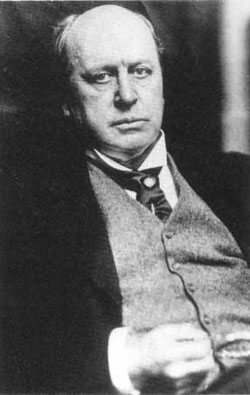
Wharton wrote her first novel The Valley of Decision, published in 1902, which was a historical romance set in Italy. Her friend, Henry James, gave her some advice, to write about New York, and so she did. Her next novel was The House of Mirth, in 1905, about a young woman living in New York who would give anything to marry into a wealthy life.
In 1906 the Whartons left America to travel through Europe where Wharton wrote many nonfiction works about architecture and art as she saw it. Teddy Wharton never took much interest in her writing; he never even read any of her works. Their marriage was more of a companionship among amicable acquaintances; even after twenty-two years of marriage, Edith Wharton was pretty much resigned to an existence without love or passion.
 |
| Morton Fullerton |
In 1907, Henry James told his friend Morton Fullerton to visit Edith Wharton on his trip to the States. While he was there Wharton spent a lot of time showing him around and having deep, meaningful conversations with him that she could never have with her husband. She also wrote to Fullerton in one of her diaries that one of Wharton’s biographers later called the “love diary.” Her relationship with Fullerton made her happier than she could ever imagine. A few people, including Henry James, realized that their relationship was deeper than it appeared on the outside. During the time she wrote many short stories and started her novel, The Customs of the Country. Eventually Fullerton resumed a romance with a former sweetheart and Wharton had to accept that what they had for those 3 years was now over. In the following years, the characters and themes that Wharton would create would reflect the inner emotions she experienced at this sensitive period in her life.
Teddy Wharton's health started to deteriorate in 1910 and Edith Wharton had to take care of him financially, emotionally, and mentally. Their relationship was facing much strain, so Wharton let her husband stay at the Mount while she moved to Paris to focus on her writing. She wrote Ethan Frome, which was an obvious reflection of her life, as Ethan could be seen as Wharton, as she struggled with a cold husband. Wharton took a stand and separated her husband in 1911, sold the Mount in 1912, and officially divorced Teddy Wharton in 1913, having to live with the feelings of shame, guilt, and disgrace. In 1913 she was a free woman and finished her novel The Custom of the Country, and did some travelling with her old friend, Walter Berry.
 |
Henry James, Edith Wharton,
and Howard Sturgis |
In 1914, with the start of the war, Wharton organized shelters for the homeless French and Belgian refugees. She also established a clinic where doctors could administer care to the sick and wounded. In 1915 she even started the Children of Flanders Rescue Committee that would feed and cloth more than a thousand displaced youngsters after the war. Even during all of this turmoil, she managed to write and publish Summer in 1917. This time also brought her own personal losses as her close friends Henry James and Howard Sturgis passed away in 1916 and 1920. She escaped her pain by writing The Age of Innocence about her childish memories of America in 1921 and was the first woman to receive the Pulitzer Prize for this novel. In 1922, she wrote her next novel, Glimpses of the Moon which was made into a movie the next year. That same year she was honored at Yale with a degree of Doctors of Letters. On her return to Paris she wrote three new books, A Son at the Front in 1923, Old New York in 1924, and The Mother’s Recompense in 1925.
 |
| Edith Wharton |
In 1927, Wharton learned that her husband passed away, and while she did not grieve, she was happy to know that he was at a peaceful rest. While Wharton was out on yet another trip, a cruise of the Mediterranean, she found out that her dear friend Walter Berry had fallen ill. On her return to Paris she remained at his bed side reminiscing about their good times together. On 1928, he passed away leaving Wharton devastated, as he was her closest friend and companion. In her sorrow she wrote another novel called The Children. In the following years, Wharton would publish a few more works including her memoir, A Backward Glance. In June of 1937 she suffered a stroke and only made a partial recovery and on August 11, 1937 Edith Wharton passed away and was buried at the Versailles cemetery next to her dear friend, Walter Berry.